Look at the CTS blog that Garry Barker has been writing to complement the lecture programme this year. Write a short response to one of the posts on the blog. Use the ideas that Garry is discussing to mount a short critical evaluation of one piece of Graphic design that you have produced on Level 5.
Looking at Gary's blog I have decided to choose the most recent project which was a collaborative brief for Green & Blacks.
Monday, 28 March 2011

Sustainability and Capitalism
According to the text sustainability is defined as a term that is the human response to the issue of climate change and the natural resource depletion, species extinction, deforestation and many other crisis that effect the planet. Sustainability is often defined as inter and intra equity in the social, environmental, economical, moral and political spheres of society. The most common definition of sustainability is from the Brundtland Commission's Our Common Future: "sustainable development is the development that meets the needs of the present without compromising the ability of future generations to meet their own needs."
The main characteristics of capitalism is that it consists of creating new markets, constantly expanding always looking for new things to commodify and often subsuming non capital markets in order to strengthen internal markets. Often capitalism can also appear to be working on a sustainable solution or be ecological but in reality it is the idea that the people are buying into. As capitalism is not just a simplistic linear system in which it subsumes singular items, it rather is constantly expanding and trapping things this can causes crisis which vary in size, expressions and materialization.
A 'crisis of capitalism' is when capitalism reaches the point where it cannot expand itself any further. This is where in order not to die out and the capital to continually grow it needs to seek out new technologies, policies and ideas.
One solution that has been offered has been the introduction of Bio-fuel produced by Biox a company that produces lower emissions for diesel engines and giving the engine a longer life. The bio fuel is considered sustainable because it is reusing materials such as vegetables and animal residue found in the food production industry. The BIOX plant was situated in the residential green zone due to the ease and cheapness of the plot.
Although it is something that produces lower emissions being more 'sustainable' it has come at a price on negatively impacting on the community of Hamilton. First of all the plant was built on a green space, this plant causes constant tremors which damages the houses surrounding the area . "This constant exposure has the potential to impact the health and safety of the entire community."
Sustainability and capitalism do not go hand in hand as capitalism is forever growing and only really uses the idea of sustainability to accumulate more expansions and wealth. Often we aren't able to be sustainable due to the lack of technology available to us or it being to expensive to buy. This shouldn't be the case if was to save our planet then these products would be readily available, but behind all the big schemes is the corporate, multinational capitalist companies looking to expand even further. One of the two must end in order for the other to capitalise and remain successful.
The main characteristics of capitalism is that it consists of creating new markets, constantly expanding always looking for new things to commodify and often subsuming non capital markets in order to strengthen internal markets. Often capitalism can also appear to be working on a sustainable solution or be ecological but in reality it is the idea that the people are buying into. As capitalism is not just a simplistic linear system in which it subsumes singular items, it rather is constantly expanding and trapping things this can causes crisis which vary in size, expressions and materialization.
A 'crisis of capitalism' is when capitalism reaches the point where it cannot expand itself any further. This is where in order not to die out and the capital to continually grow it needs to seek out new technologies, policies and ideas.
One solution that has been offered has been the introduction of Bio-fuel produced by Biox a company that produces lower emissions for diesel engines and giving the engine a longer life. The bio fuel is considered sustainable because it is reusing materials such as vegetables and animal residue found in the food production industry. The BIOX plant was situated in the residential green zone due to the ease and cheapness of the plot.
Although it is something that produces lower emissions being more 'sustainable' it has come at a price on negatively impacting on the community of Hamilton. First of all the plant was built on a green space, this plant causes constant tremors which damages the houses surrounding the area . "This constant exposure has the potential to impact the health and safety of the entire community."
Sustainability and capitalism do not go hand in hand as capitalism is forever growing and only really uses the idea of sustainability to accumulate more expansions and wealth. Often we aren't able to be sustainable due to the lack of technology available to us or it being to expensive to buy. This shouldn't be the case if was to save our planet then these products would be readily available, but behind all the big schemes is the corporate, multinational capitalist companies looking to expand even further. One of the two must end in order for the other to capitalise and remain successful.
Monday, 14 March 2011


Thursday, 10 March 2011
Communication Theory
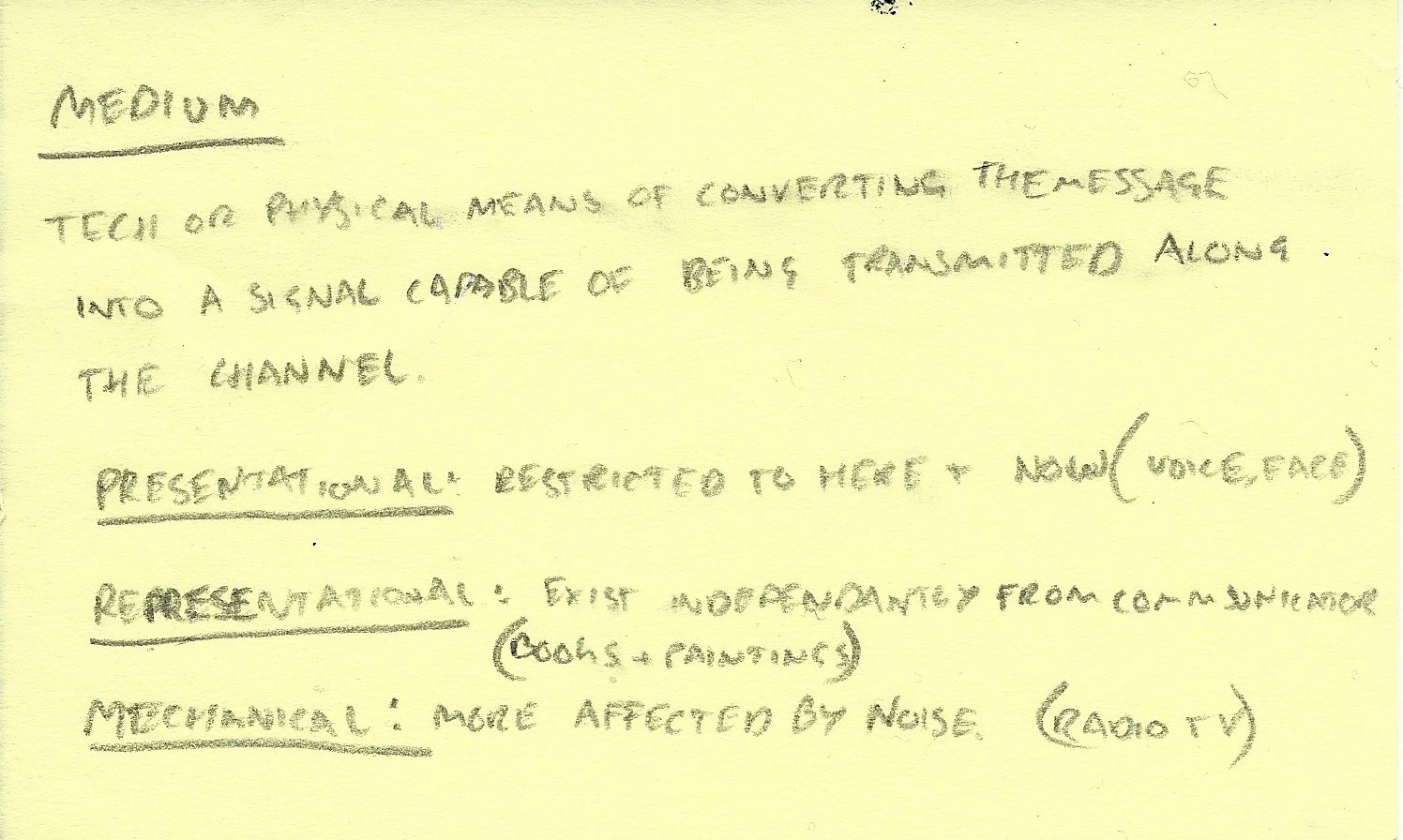
Signs and symbols are around in the world and need to accurately relay there message to an audience in the most redundant way possible. A good example of a piece of design that can be related to the Shannon and Weaver's communication model is the male and female pictograms for toilets. Using the Shannon and Weaver model the male and female pictograms are the information source and are transmitted
Due to where the images are situated they are usually placed with a high amount of noise around, such as other signs and symbols. Other possible sources of noise can be the eyesight of people, if the sign or symbol has been defaced or graffitied. If the sign is obscured this can create affect whether or not the information is transmitted to the receiver and is decoded. Looking at image below they are simple images that can be recognised as a person (people) with the female image pictured in a dress and the male image without the dress there is a clear difference between the two, but at the same time they can linked to one another because they are a similar style to each other.
These pictograms are found within the public domain with the need to communicate as much information as possible with as little information being lost between the transmission to the receiver. These images are redundant due to fact that they a highly predictable, with as little information as possible, the images rely on convention. All over the world similar images are used to communicate male and female toilets, they may be different but the audience can relate these images to what know to mean male and or female. This is not a piece of design that includes entropy as entropic design is less predictable, with a higher volume of information for the receiver to decode. Entropic designs are usually unconventional as they are usually aimed at a more specific and smaller target audience as apposed to a sign or symbol that is designed for a large audience.

Due to where the images are situated they are usually placed with a high amount of noise around, such as other signs and symbols. Other possible sources of noise can be the eyesight of people, if the sign or symbol has been defaced or graffitied. If the sign is obscured this can create affect whether or not the information is transmitted to the receiver and is decoded. Looking at image below they are simple images that can be recognised as a person (people) with the female image pictured in a dress and the male image without the dress there is a clear difference between the two, but at the same time they can linked to one another because they are a similar style to each other.
These pictograms are found within the public domain with the need to communicate as much information as possible with as little information being lost between the transmission to the receiver. These images are redundant due to fact that they a highly predictable, with as little information as possible, the images rely on convention. All over the world similar images are used to communicate male and female toilets, they may be different but the audience can relate these images to what know to mean male and or female. This is not a piece of design that includes entropy as entropic design is less predictable, with a higher volume of information for the receiver to decode. Entropic designs are usually unconventional as they are usually aimed at a more specific and smaller target audience as apposed to a sign or symbol that is designed for a large audience.

Wednesday, 12 January 2011
Essay Bibliography
Gillian Dyer. (1982) Advertising as Communication. New York. Routledge.
Anthony Pratkans, Elliot Aronson (2001) Age of Propaganda: The everyday use and abuse of persuasion, New York. 3 Owl Books, U.S.
Sue Curry Jansen. (2003) Critical Communication Theory: Power, media, gender and technology. Maryland, Rowan and Littlefield Publishers.
John Fiske. (1990) Introduction to communication studies.New York, Routledge.
John O'Shaughnessy, Nicolas J. O'Shaughnessy. (2003) Persuasion in Advertising. New York, Routledge.
Colin Moore. (2010) Propaganda Prints: A history of Art in the service of social and political change. London, Herbert Press Ltd
By Garth S. Jowett, Garth Jowett, Victoria O'Donnel. (2006)Propaganda and persuasion. London Sage Pubishing
Susan Bachrach and Steven Luckert. (2009) State of deception: The power, media, gender and technology. New York, W.W Norton and Company.
Robert B. Cialdini. (2007) The Psychology Influence of Persuasion. USA,Harper Business
David Welch. (2002) The Third Reich: Politics and propaganda. New York, Routledge.
Richard Alan Nelson. (1996) A Chronology and Glossary of Propaganda in the United States, USA ,Greenwood


Monday, 10 January 2011
Essay Ideas
Idea:
How affective was Nazi Propaganda used in comparison to modern forms of advertising
- What Propaganda is and the persuasive techniques used within it.
- How the Nazis used propaganda and why.
- Anaysis of examples of both Nazi propaganda and modern advertising in relation to communication theory using the Shannon and Weaver model.
- How affective was the use of propagada.
Sources:
- Dyer. (1982) Advertising as communication. New York, Routledge
-John O'Saughnessy, Nicolas J. O'Shaughnessy. (2003) Persuasion in Advertising. New York, Routledge
-John Fiske. (1990) Introduction to communication studies. New York, Routhledge
-Susan Bachrach and Steven Luckert. (2009) State of deception: Power, media, gender and technology. New York, W.W Norton and Company.
-David Welch. (2002) The Third reich : Politics and Propaganda. New York, Routledge.
How affective was Nazi Propaganda used in comparison to modern forms of advertising
- What Propaganda is and the persuasive techniques used within it.
- How the Nazis used propaganda and why.
- Anaysis of examples of both Nazi propaganda and modern advertising in relation to communication theory using the Shannon and Weaver model.
- How affective was the use of propagada.
Sources:
- Dyer. (1982) Advertising as communication. New York, Routledge
-John O'Saughnessy, Nicolas J. O'Shaughnessy. (2003) Persuasion in Advertising. New York, Routledge
-John Fiske. (1990) Introduction to communication studies. New York, Routhledge
-Susan Bachrach and Steven Luckert. (2009) State of deception: Power, media, gender and technology. New York, W.W Norton and Company.
-David Welch. (2002) The Third reich : Politics and Propaganda. New York, Routledge.
Tuesday, 14 December 2010


Tuesday, 7 December 2010
Pseudo Individualisation Blog Task
In the text Adorno engages in a analysis of music and how particular music such as serious music and popular music and how each of the types of music differ from one another. Adorno refers to pop music as being "standardised, even where the attempt is made to circumvent standardisation." (Adorno, 1941 pg. 11). According to Adorno, popular music isn't unique, in every song though it may sound the sound different can be linked back to a familiar rythme or how a song is structured such as a chorus consisting of thirty two bars or in a dance or drum and bass song where there is a build up and drop or break down this is a common pattern.
Adorno also suggests the idea of Pseudo- Individualisation, which is the idea of the listener having a preconception of a particular kind of music and them already judging that song whether or not it fits in with there interests. This is also apparent in other things around the world, fashion especially. Adorno's view is that if a piece of music is standardised but appears to people that it is different they will listen and buy it out of knowing they will enjoy listening to the music but not realising that they have listened to something very similar before.
This video is a perfect example of what may be thought as non pop music is actually far from that. Mainly focusing on the actual genre of music itself rather than the video. Dubstep although not classed as popular music can be seen to be standardised. Dubstep prides itself as not following a specific structure as seen in music that it has derived from such as drum and bass and garage. Structural characteristics such as the wobble base, bass drops and rewinds are all things that are featured heavily in the music.
Adorno believes that people want to escape the harsh realities of the real world and wish to engage with something that isn't serious. It is suggested that those who listen to the music do not understand the music but merely due to the type of people that listen to ... are listening to it because it is what is represented to them in that culture and what it means to them.
.
Adorno also suggests the idea of Pseudo- Individualisation, which is the idea of the listener having a preconception of a particular kind of music and them already judging that song whether or not it fits in with there interests. This is also apparent in other things around the world, fashion especially. Adorno's view is that if a piece of music is standardised but appears to people that it is different they will listen and buy it out of knowing they will enjoy listening to the music but not realising that they have listened to something very similar before.
This video is a perfect example of what may be thought as non pop music is actually far from that. Mainly focusing on the actual genre of music itself rather than the video. Dubstep although not classed as popular music can be seen to be standardised. Dubstep prides itself as not following a specific structure as seen in music that it has derived from such as drum and bass and garage. Structural characteristics such as the wobble base, bass drops and rewinds are all things that are featured heavily in the music.
Adorno believes that people want to escape the harsh realities of the real world and wish to engage with something that isn't serious. It is suggested that those who listen to the music do not understand the music but merely due to the type of people that listen to ... are listening to it because it is what is represented to them in that culture and what it means to them.
.

Monday, 29 November 2010
Panoticism Blog Task
Sign up sheets can be seen as an example of panopticism in contemporary society. The sign up sheet is a form of register which is put up on the board on a daily basis, "permanent registration" (Foucault, 1977 p61.) unbeknown to the students whether it is going to be up on the board or not, this creates a "state of conscious and permanent visibility that assures the automatic functioning of power." (Foucault, 1977 p65) therefore a student regulates his or her actions to sign in early in fear of being late. With this in mind there is the burden and anxiety of having to sign in not knowing whether the register is left up all day allowing students to sign in at will throughout the day or not. Each day " never know whether he is being looked at any one moment, but he must be sure that he may always be so" (Foucault, 1977 p65). Each student is always conscious of if whether or not the register is left up all day allowing students freely to sign in, it allows them to make the choice as to whether there attendance is being assessed or not. The control the tutors hold is mentally driven, physiological burden which can lead to warnings and exclusion from the course if there is a failure to sign in.
If for any reason the sign up sheet is taken down and the students have missed a there chance to sign up, a thick black marker is placed through their name, which allows staff and fellow students to "judge at a glance, without being concealed" (Foucault, 1977 p67). This brands that particular student as an outcast, isolating and excluding them from the there fellow peers. This formalisation of the sign up sheet is introduced from the beginning of the course which the tutors (people with the knowledge and power) indoctrinate the students affectively conforming and becoming docile bodies creating a disciplined society within the course.
If for any reason the sign up sheet is taken down and the students have missed a there chance to sign up, a thick black marker is placed through their name, which allows staff and fellow students to "judge at a glance, without being concealed" (Foucault, 1977 p67). This brands that particular student as an outcast, isolating and excluding them from the there fellow peers. This formalisation of the sign up sheet is introduced from the beginning of the course which the tutors (people with the knowledge and power) indoctrinate the students affectively conforming and becoming docile bodies creating a disciplined society within the course.
Thursday, 11 November 2010


Sunday, 7 November 2010


Thursday, 4 November 2010
Tuesday, 23 March 2010
Graphic Design as Communication (Notes)
Graphic Design derives from the ancient Greek word Graphein, which meant mark making.
Design entered into English from the Renaissance French word dessiner, which meant drawing, planning, sketching and designing.
Design is seen to become more like art when moving into print making and advertising.
"A medium.. a means of communication consisting in' the use of words and images on more or less everything"
Broad definition
Not limited to high or low culture
Doesn't exclude fine art
Graphic design is mass
- reproducible
- affordable/accessible to a wide audience
- conveys ideas through a combination of words and image
Marshall Arisman places art, illustration , graphic design and advertising in a scale of purity;
- Fine Art is pure
- Illustration is the beginning of selling out
- Graphic Design is commercial art
- Advertising is selling- Period
Fine art work given titles, establishes a relation to a word even if it doesn't appear in the work
Functions of Graphic Design
2 approaches in direction, social, cultural and economic functions of graphic design as a whole
Are functions individually
The basic functions have changed little over time the first role is:
- Identification- the graphic designer has the role to say what some is
- Information and instruction- these indicate the relationship between one another, scale and position. An example of this can be seen in maps
- Presentation and promotion- aim to envelope the spectator
- Symbolic- (Represent something,
- Epistemic- Convey information about the world and its contents
- Aesthetic- Intended to please the audience
What is Communication?
Kalman says graphics is a 'means of communication'
Communication is described as a metaphor
Communication Theory
Transfer of information between people
Meggs Dipiction:
Information Source > Transmitter > Signal > Receiver > Recipient
Barnard. M (2005) ‘Graphic Design as Communication’ Cornwall, MPG Books.
Advertising, Publicity and the Media
Advertising, Publicity and the Media
- Time Square New York City
- 11,000 adverts on TV in 1990 and has trebled by now if not more
- 25 million Print adverts produced every year
- Advertising is unavoidable, it effects everyone consciously and subconsciously (bombardment)
Karl Marx (1818-1883)
- Communist Manifesto (1848)
- Das Kapital (1867) Volume 1
- Philosopher
- Theorist of the way of the world works
(Marxism Console/own life based on)
Classic Adverts
- The Stanley Range.
- The Uncle Sam Range
Critique of Consumer/Commodity Culture
- People are identified through consumer products rather than by what they produce themselves
- Stewart Ewan- 'The commodity self'
- Marxists do not agree with the capitalist idea of personal wealth and the gain above others. They believe that you shouldn't be defined as a person by what you buy and who you have relationships with
- Judith Williamson, author of Decoding Advertisements
Symbolic associations
- People buy into the consumer market through various mechanisms of advertising.
- It perceives the idea that the consumer could make a change. An example of this is the CK1 aftershave, makes us believe that we will become like the model in the advert, playing on the needs of the consumer
- Perfume adverts - Sex appeal
How does commodity culture perpetuate false needs?
Novelty
- Advertising makes us think that we need something that is not necessary to live in the world but commodity culture tricks us into thinking that we need it.
Planned obsolescence
- Products are designed to last a few years at the most.
- This is so that the consumer has to go out and buy the same product a couple of years down the line where the product has broken or it has become obsolete.
Aesthetic innovation- the way things look, newer, more modern and sexier
Commodity Fetishism
- Advertising conceals the background 'history' of products
Reification
- this is where a product is given human associations
- Products themselves are perceived as sexy, romantic, cool, sophisticated ect
John Berger Ways of seeing- theorist, interrogates systems of advertising
Societies Views on figures
- Play on the idea of being inadequate
- Mythical goddess replaced, in modern society by glamor models
Positives
- Economy
- Subsidizing the media quality
Negatives
- Stereotyping
- Encourages addictive, obsessive and acquisitive behaviour
- It makes people unhappy with there existing material possessions
- Causes envy and inadequacy
- Seeks to make people unhappy with existing materials
- No morals in advertising
Anti-Advertising
- Subvert the adverts with mechanisms that detract the popularity
- Adbusters Absolut Vodka
- Adverts to attack adverts
Monday, 22 March 2010
Semiotics (Notes)
The social 'science' of understanding meaning. (Meaning constructed through a shared knowledge / language / cultural codes.
'Codes' - found in all forms of cultural practice and RELY on shared knowledge - i.e. red can signify love a rose - romance / love etc.
Ferdinand de Saussure's theory - 1916 – 'Structuralism'.
 Bond between the signifier and the signified is arbitrary (random) - people naturally assign meaning.
Charles Sanders Peirce's theory:

3 catergories of signs that Peirce identifies: - ICON - directly references objects (photos - iconic signs) - INDEX - (an inferred) direct link between sign and object . (INDEXICALLY) use a sign but no direct link. - SYMBOL - no logical link between sign and object (pure learned meaning).
Roland Barthes's theory:

Sunday, 21 March 2010
Postmodernism
Modernism is associated with:
- Experimentation
- Innovation
- Individualism
- Progress
- Purity
- Originality
- Seriousness
- Exhaustion
- Pluralism
- Pessimism
- Disillusionment with the idea of absolute knowledge
- Expression of modern life, technology and new materials (Modernity)
- Reaction to modern life, technology, new materials and communication (Postmodernity)
- 1917- German writer Rudolph Pannwitz, spoke of 'nihilistic, amoral, postmodern men'
- 1964- Leslie Fielder described a 'Post' culture, which rejected the elitist values of modern culture
- 1960s beginnings
- 1970s established as term (Jencks)
- 1980s recognisable style
- 1980s & 90s dominant theoretical discourse
- Today: Tired & simmering
- After modernism
- The historical era following modern
- Contra Modernism
- Equivalent to 'late capitalism' (Jameson)
- Artistic and stylistic eclecticism
- 'global village' phenomena: globalisation of cultures, race, images, capital, products
- The demolition of the Pruitt- Igoe development, St Louis
Postmodern aesthetics
- Complexity
- Mixing materials and styles
- Re-using images
At the end of the 1950's the purest form of Modernism painting was Formalism- theorised by the critic Clement Greenberg
Marshal McLuhan- "Advertising is the greatest artform of the 20th Century"
High art/Low are Divide
- Postmodernism begins to crumble
- Crisis in confidence and also freedom
- TV quiz shows
- 'Reality TV'- Big Brother
- TV shows about TV
- A vague disputed term
- Attitude of questioning conventions
- Multiplicity of styles and approaches
- Crisis in confidence
- Space for new voices
- Rejection of technological determinism
Subscribe to:
Posts (Atom)